01
3D runtime
Web-based (Three.js / WebGL) or Unity — selected for the specific performance, deployment, and interaction requirements of the system, not by default.
- Runtime matched to use case and deployment
- Performant at target model complexity
High-performance interactive 3D systems that help engineering and operational teams understand, navigate, and work with complex assets and facilities — built for production, not demonstration.
High-performance 3D for real operational scale
Data-bound components, not standalone visuals
Structured workflows, not just navigation
Web, desktop, or Unity — fit to the context
Engineering environments are spatially complex in ways that documents and dashboards cannot communicate. Industrial 3D platforms address the visibility and context problems that create review friction and planning uncertainty.
Engineering drawings and data sheets do not communicate the complexity of large physical systems. Teams make decisions without the full picture and rely on expertise that should not be required.
Without spatial context, planning and review work is slower and less confident. Meetings take longer, scope grows uncertain, and decisions get deferred unnecessarily.
Large CAD and BIM models are computationally expensive. Off-the-shelf renderers cannot handle real-world datasets at usable performance levels for engineering teams.
Industrial 3D platforms are composed systems. These are the architectural layers that determine whether a 3D platform performs in production or struggles when teams actually rely on it.
Web-based (Three.js / WebGL) or Unity — selected for the specific performance, deployment, and interaction requirements of the system, not by default.
CAD and BIM ingestion, model optimisation, LOD strategies, and structured hierarchy management — the foundation of model performance and long-term accuracy.
Engineering and operational data bound to components and assemblies so the visual system is a structured information environment, not just geometry.
Structured views, measurement tools, section planes, layer controls, and inspection aids — designed around how operational teams actually work, not generic 3D navigation.
PlantSentry and PipelineSentry both depend on robust 3D environments to ground operational decisions — each built around specific performance and integration requirements.
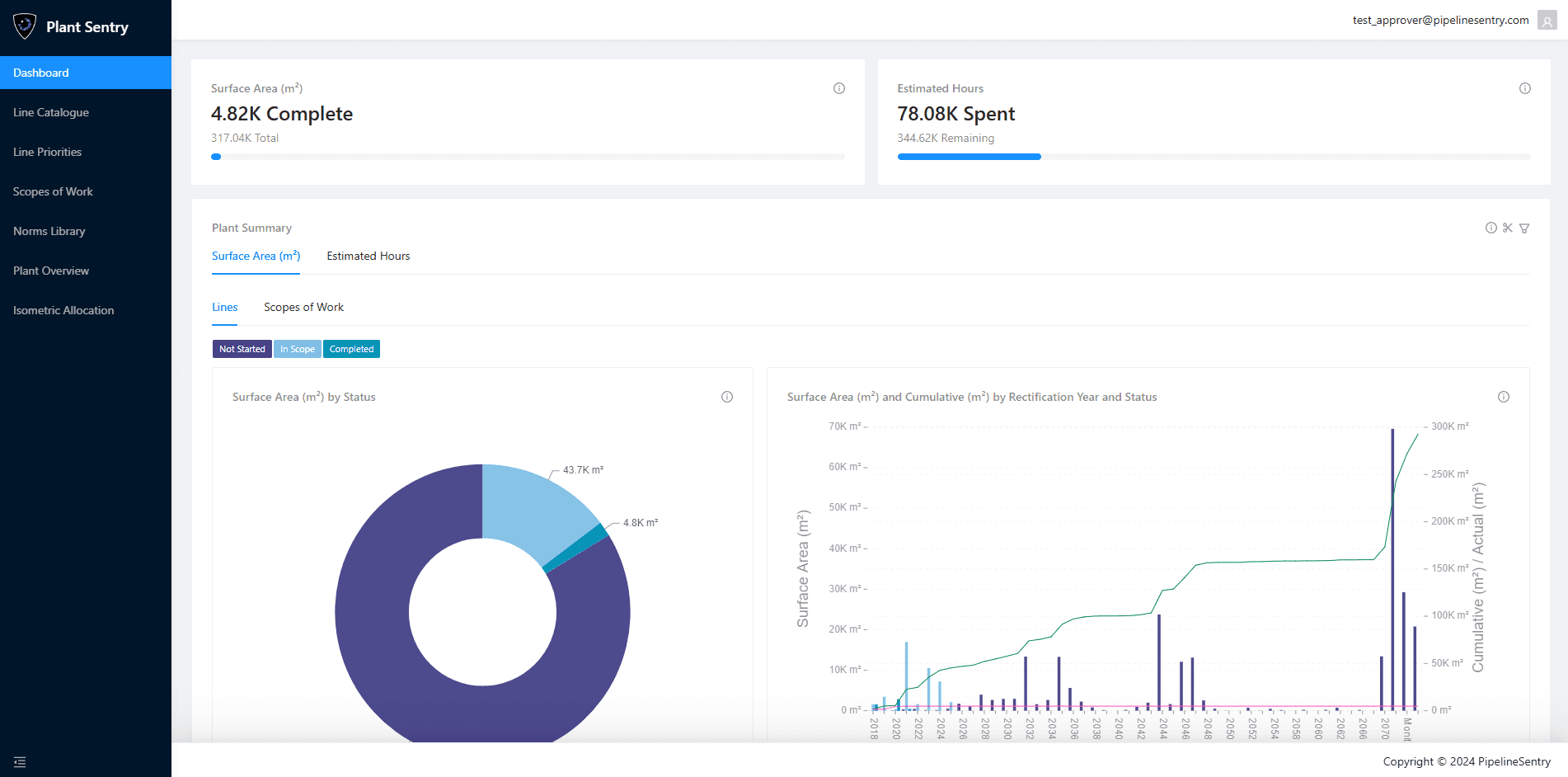
The 3D plant environment in PlantSentry grounds inspection scope decisions in real facility context — reducing ambiguity before work begins and supporting accurate decisions during execution.
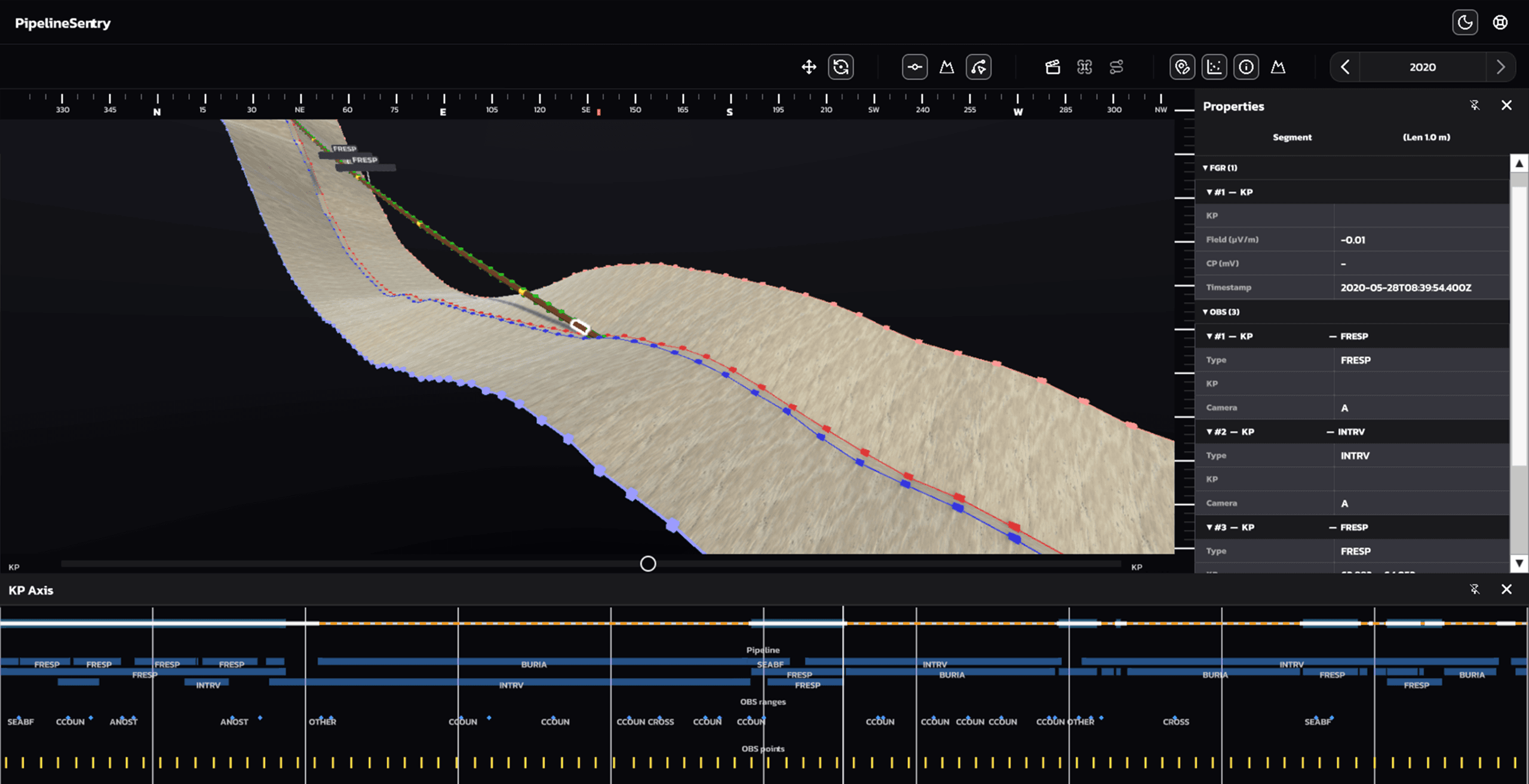
PipelineSentry combines geospatial mapping with high-fidelity 3D visualisation of subsea infrastructure — giving integrity teams a coherent operational picture at portfolio scale.
Performance-first architecture prevents expensive rework. We establish the technical foundations before building interface layers.
Define the model pipeline, render strategy, and runtime selection before building any interface. This is where most 3D platform failures originate.
Connect the 3D environment to real asset data early so the visual system is accurate from the start rather than being retrofitted later.
Design tools, views, and interaction patterns around specific operational workflows — not generic 3D navigation conventions.
Tell us about the environment you need to make sense of. We'll design a system that is accurate, performant, and genuinely useful to the teams using it.